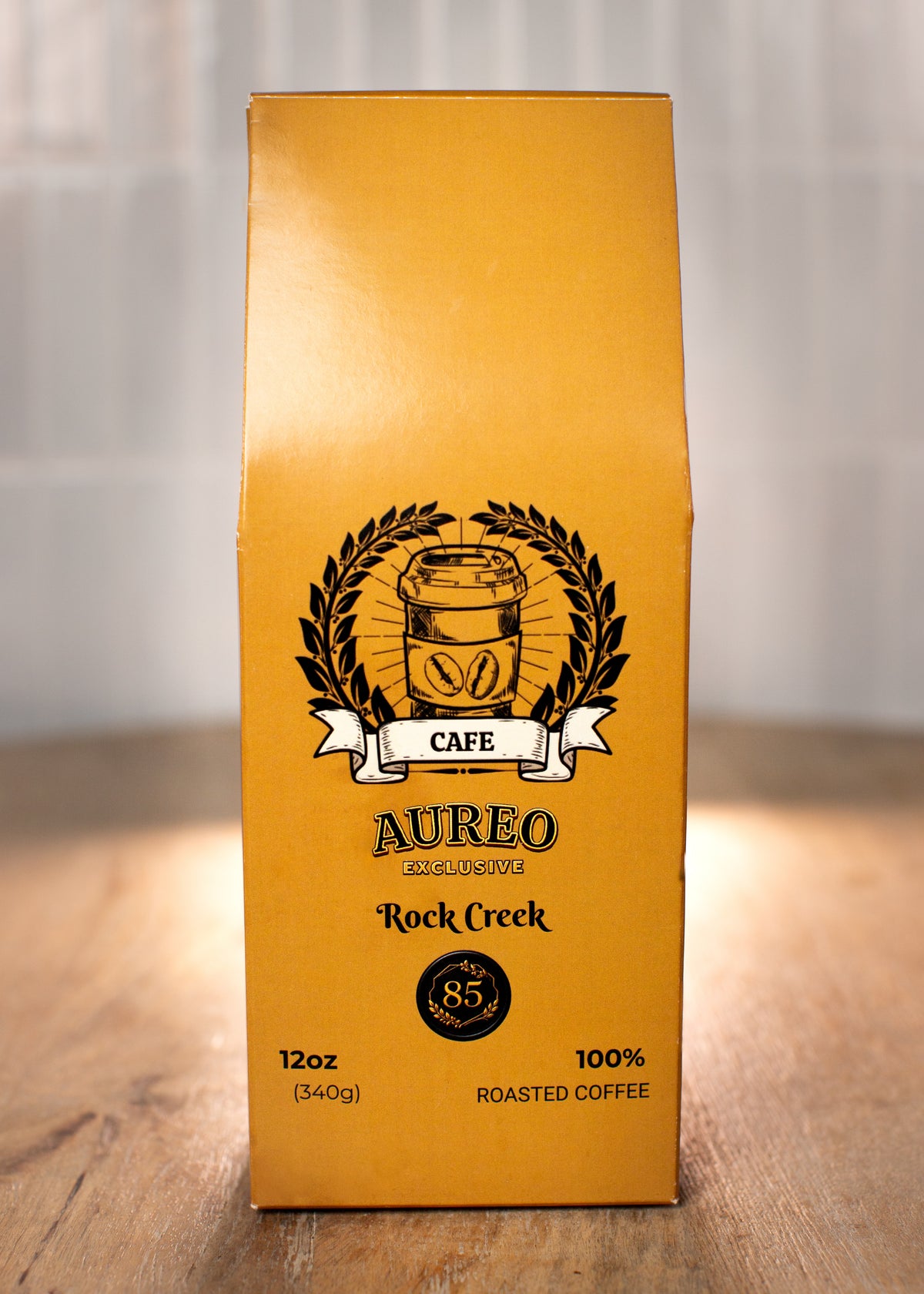
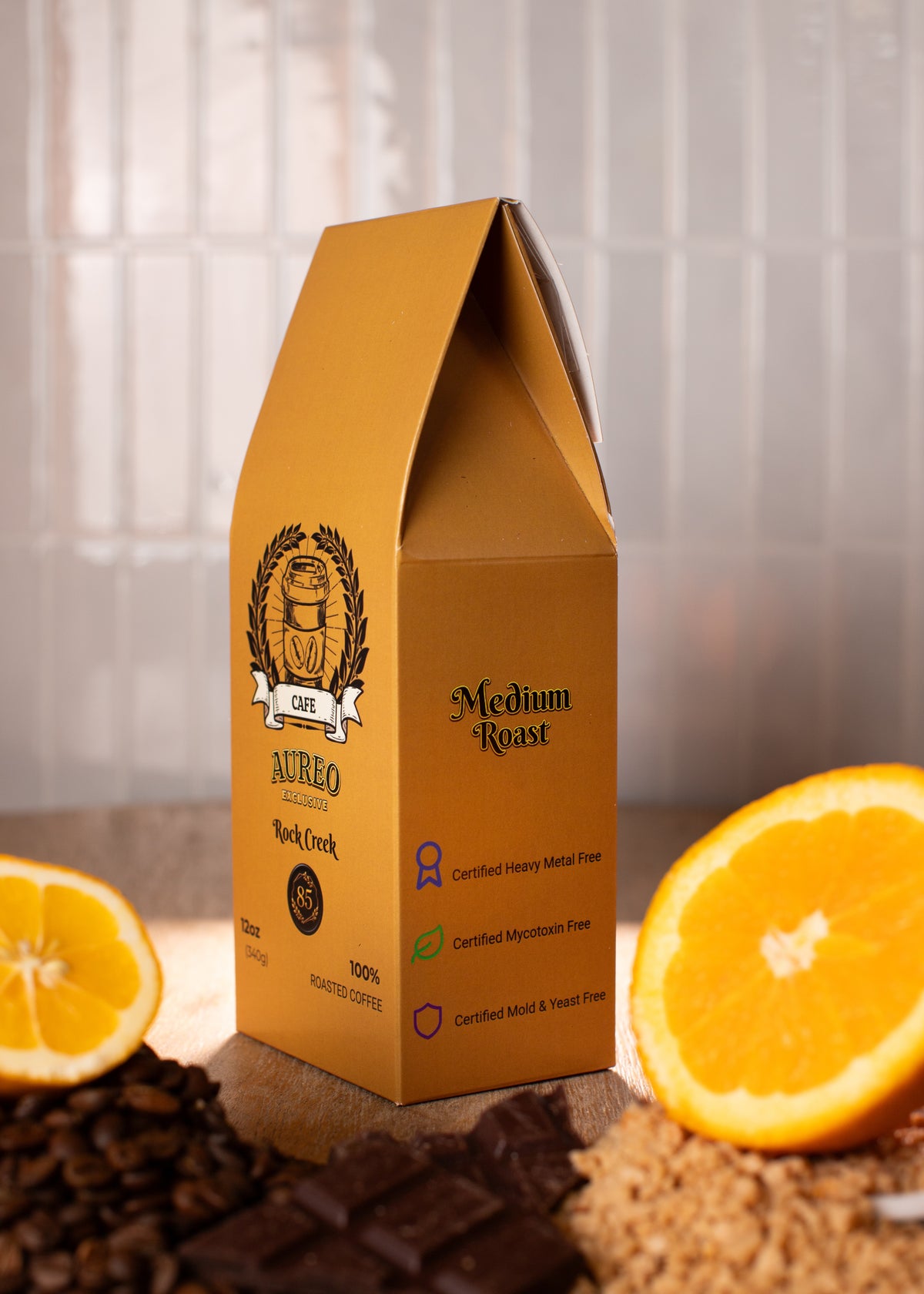
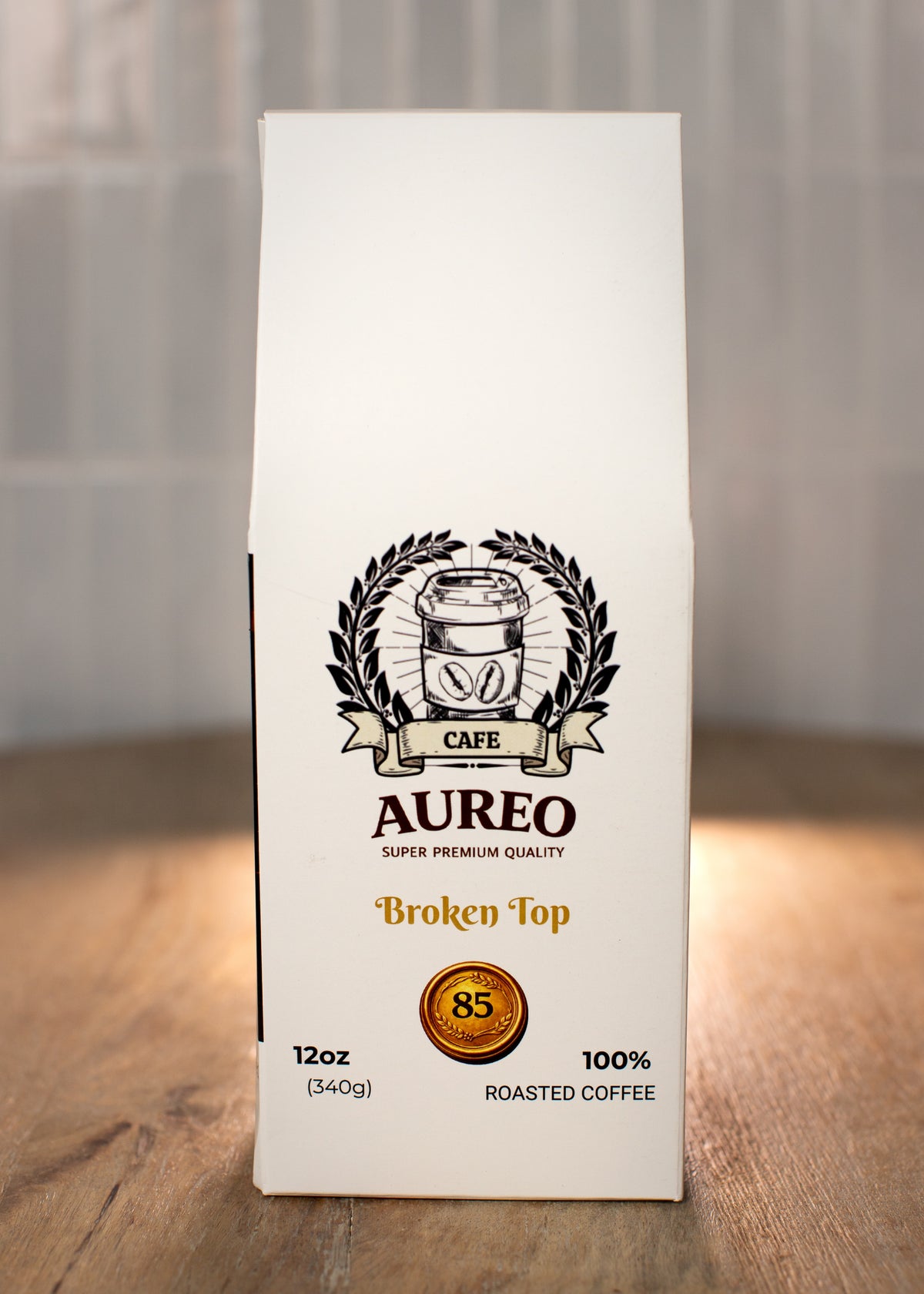
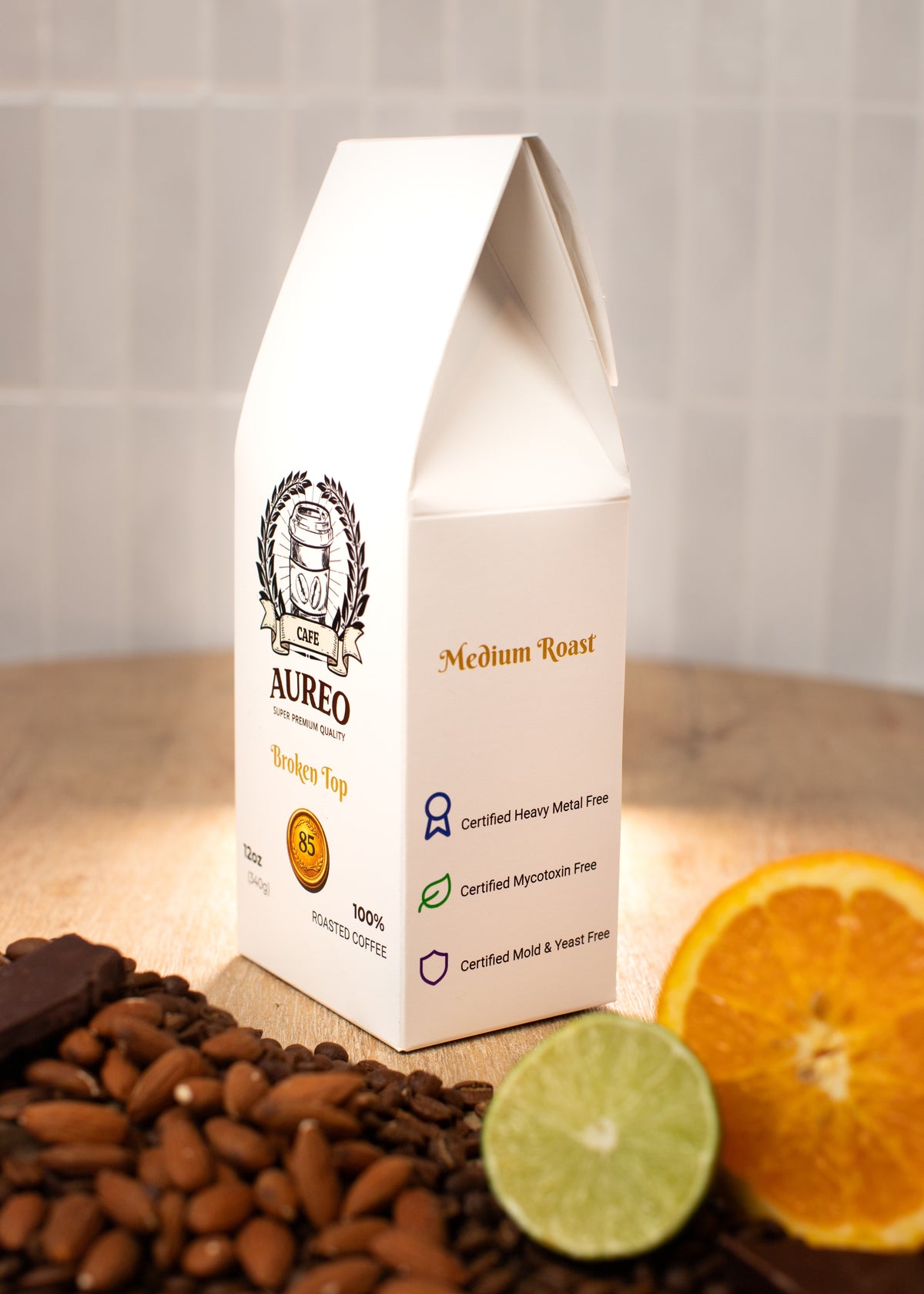
A good coffee bag tells you a surprising amount: how the coffee was roasted, where it grew, how it was processed and what it should taste like. That level of detail is one of the hallmarks of specialty coffee. Once you know what each detail means, you can predict a lot about the cup before you open the bag.
Roast level
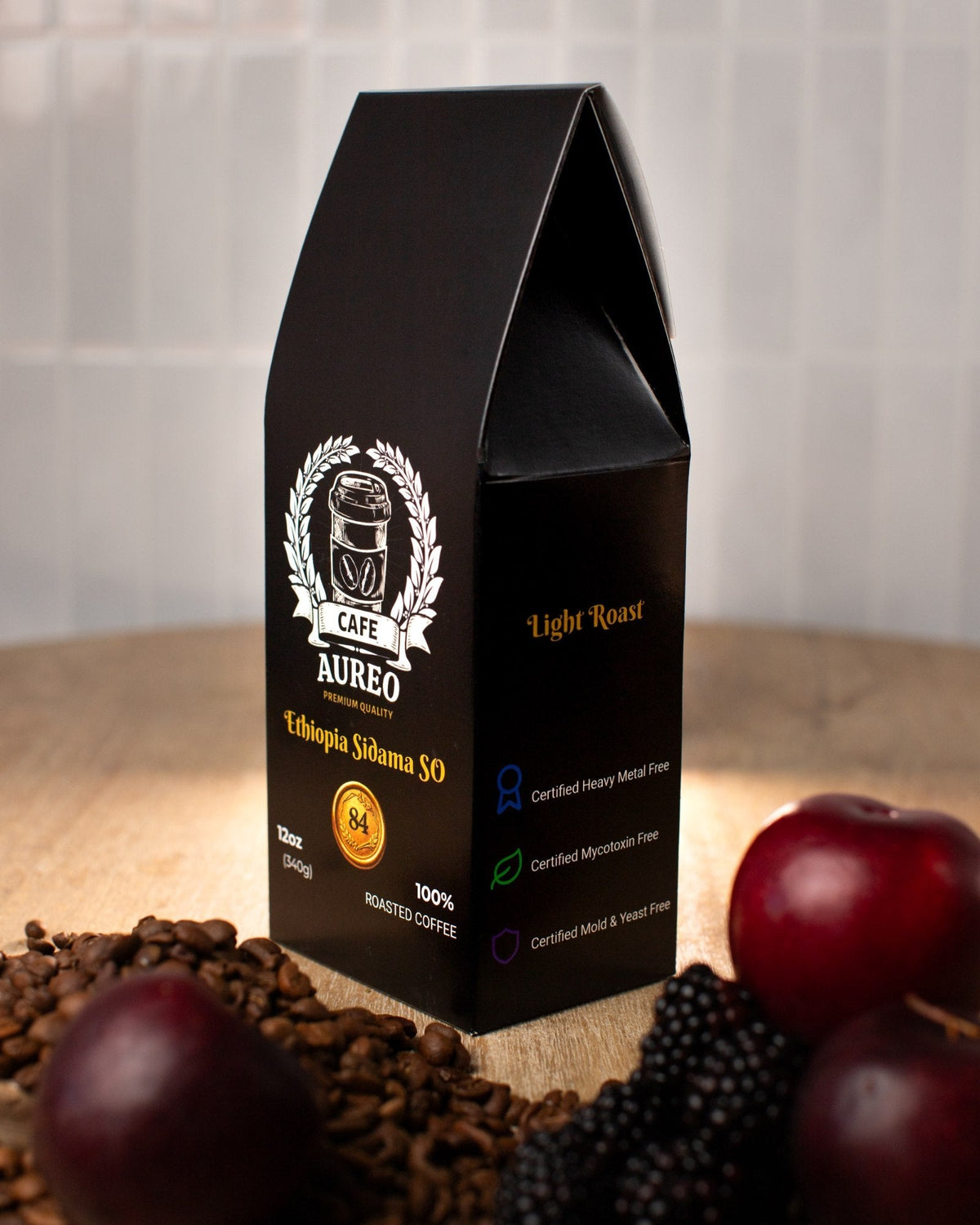
Usually printed prominently: light, medium, dark, or something in between. It is the strongest predictor of flavor. Lighter roasts are brighter and fruitier; darker roasts are heavier, roastier and lower in acidity. See our guide to light, medium and dark roast.
Single origin or blend
A single-origin coffee comes from one country or growing region and usually names it on the front. A blend combines coffees from several origins and often has its own name instead. Neither is better; they're built for different goals. Read single origin vs. coffee blends.
Origin and region
Origin is the country; region narrows it down, such as Huila in Colombia or Sidama in Ethiopia. Region matters because climate, soil and altitude vary within a country, and so does local processing tradition. Our coffee origins guide explains how growing region shapes flavor.
Altitude (MASL)
Altitude is usually listed in MASL, meters above sea level. To convert to feet, multiply by about 3.3. For example, 1,500 MASL is roughly 4,900 feet.
Coffee grown at higher altitudes generally ripens more slowly in cooler temperatures. That slower development is often associated with denser beans and more pronounced acidity and complexity. Altitude isn't a guarantee of quality on its own, but it's a useful clue. Blends often list a range because their components come from different elevations.
Processing method
Processing describes how the coffee seed was separated from the fruit around it after harvest. It has a big effect on flavor:
- Washed: the fruit is removed before drying. Expect a clean, bright, clear cup.
- Natural (or dry): the whole cherry dries around the seed. Expect fruitier, sometimes wine-like flavors and more body.
- Pulped natural: the skin is removed but some sticky fruit layer stays on during drying. Expect added sweetness and body. Common in Brazil.
More in washed vs. natural coffee.
Variety (or varietal)
Coffee plants come in many varieties, just as grapes do. Names you may see include Bourbon, Typica, Caturra, Catuaí, Mundo Novo, Castillo and Ethiopian heirloom varieties. Variety contributes to a coffee's character, but for most shoppers it's the least important detail on the bag. Think of it as background rather than a buying decision.
Tasting notes
Tasting notes describe flavors that come from the coffee itself, not added flavorings. They're the most practical way to judge whether you'll enjoy a coffee. See understanding coffee tasting notes.
Roast date and freshness information
Many specialty roasters print a roast date; others use a best-by date or a lot code. Coffee doesn't spoil quickly, but its aroma fades over time, especially after the bag is opened. Our guide to coffee freshness and storage explains how to keep it tasting its best.
Size and grind
Bag size is usually given in ounces and grams. A 12 oz bag (340 g) makes roughly 18 to 22 cups, depending on how strong you brew. Many coffees are offered whole bean or ground; see whole bean vs. ground coffee for which suits you.
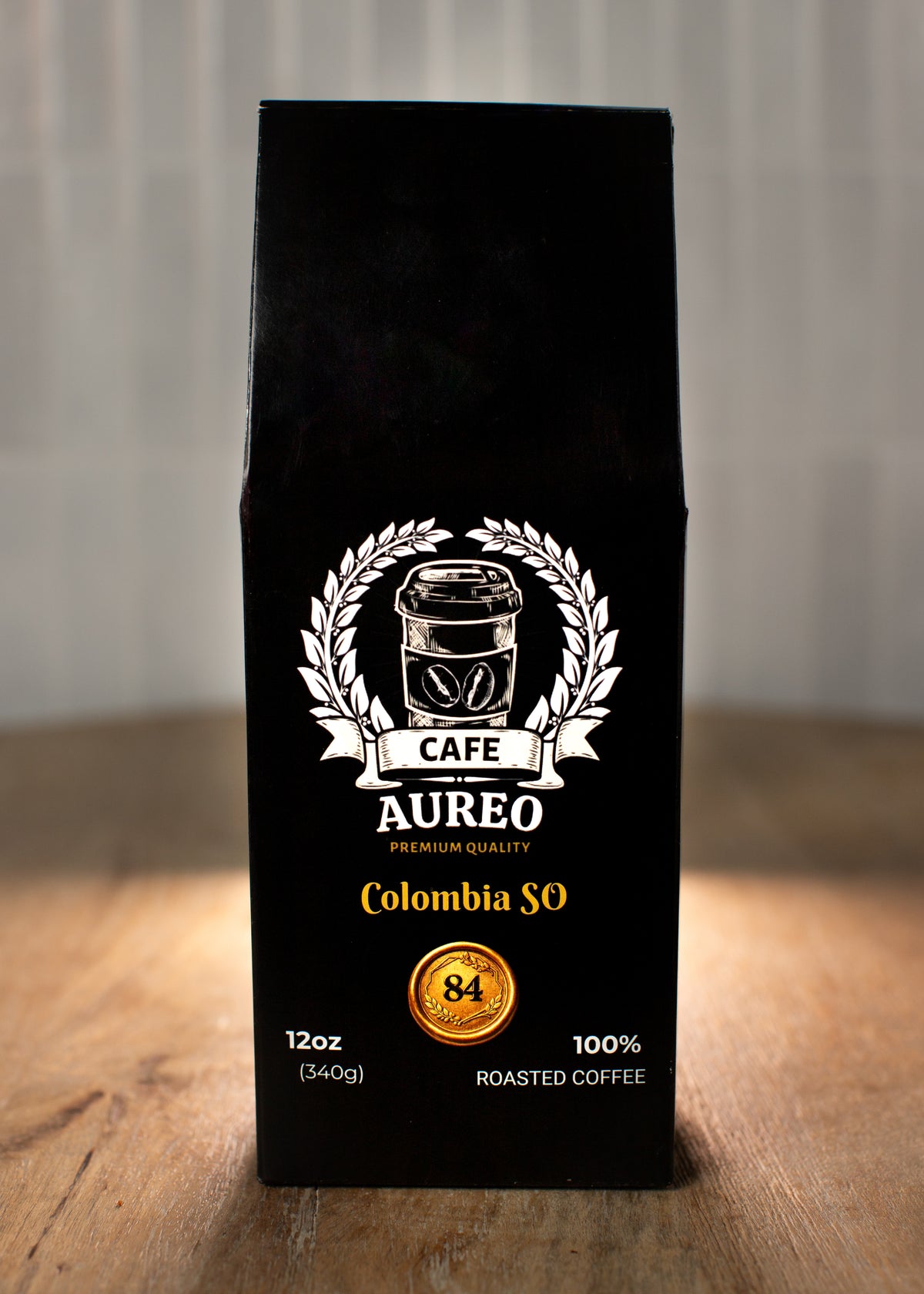
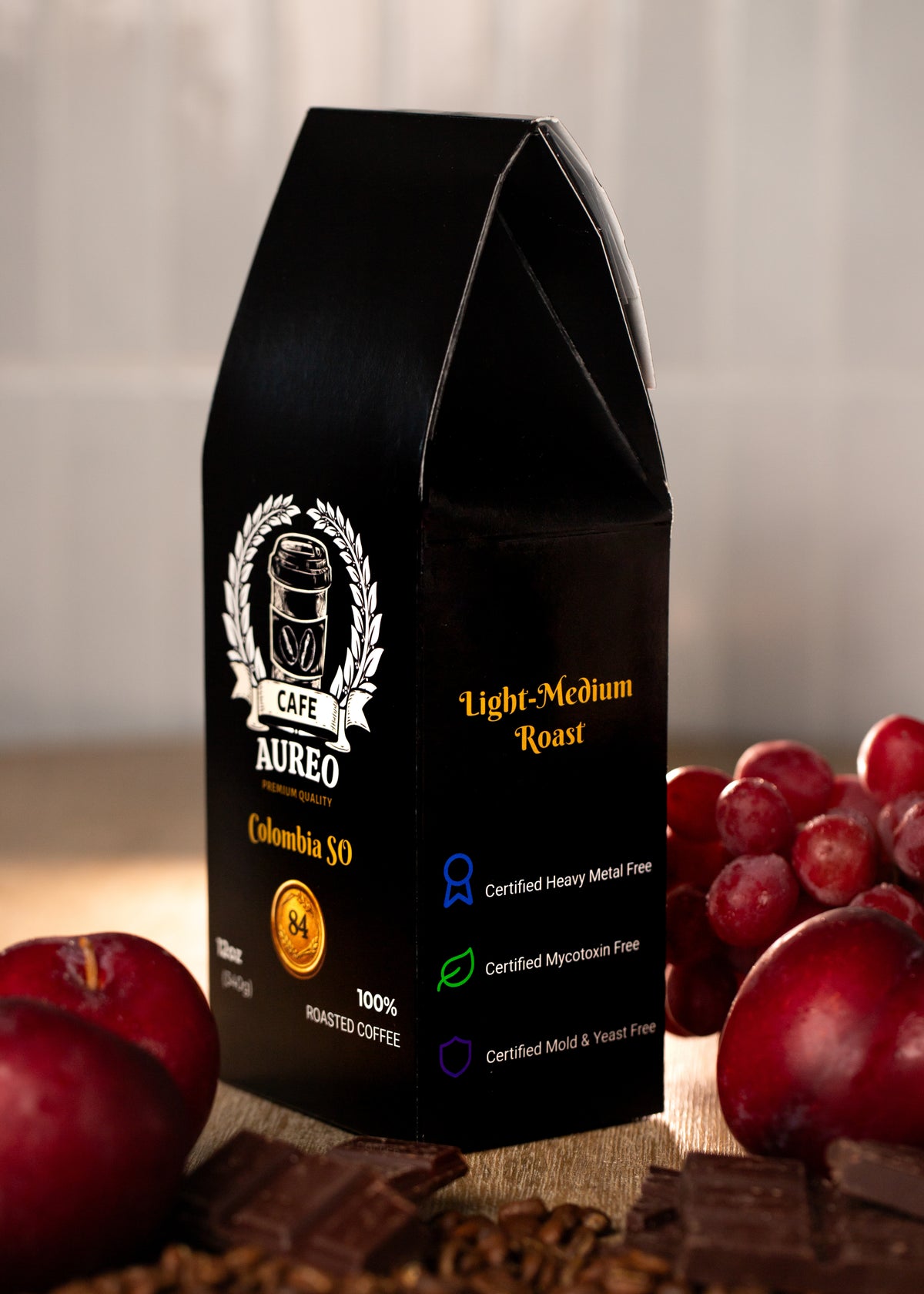
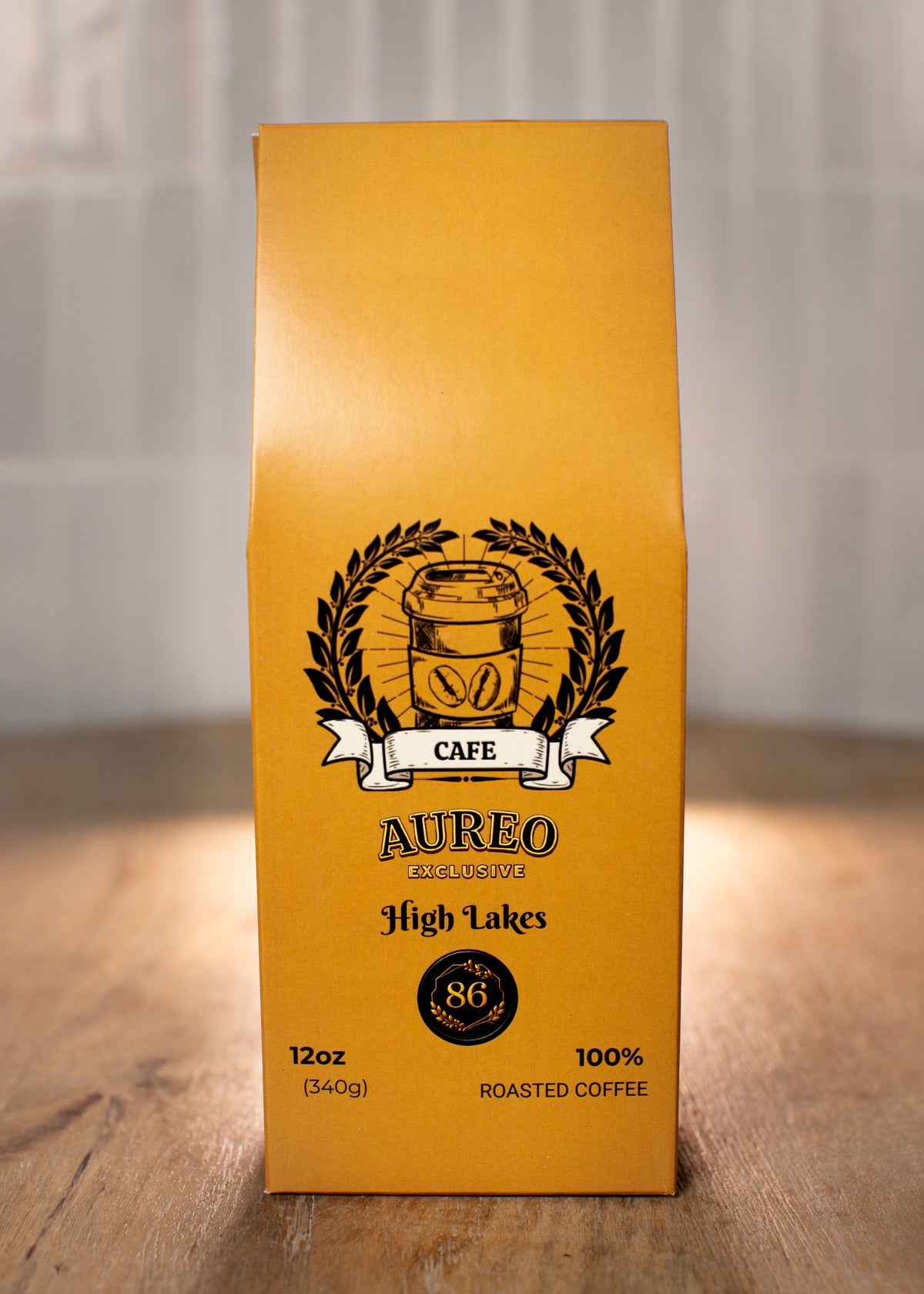
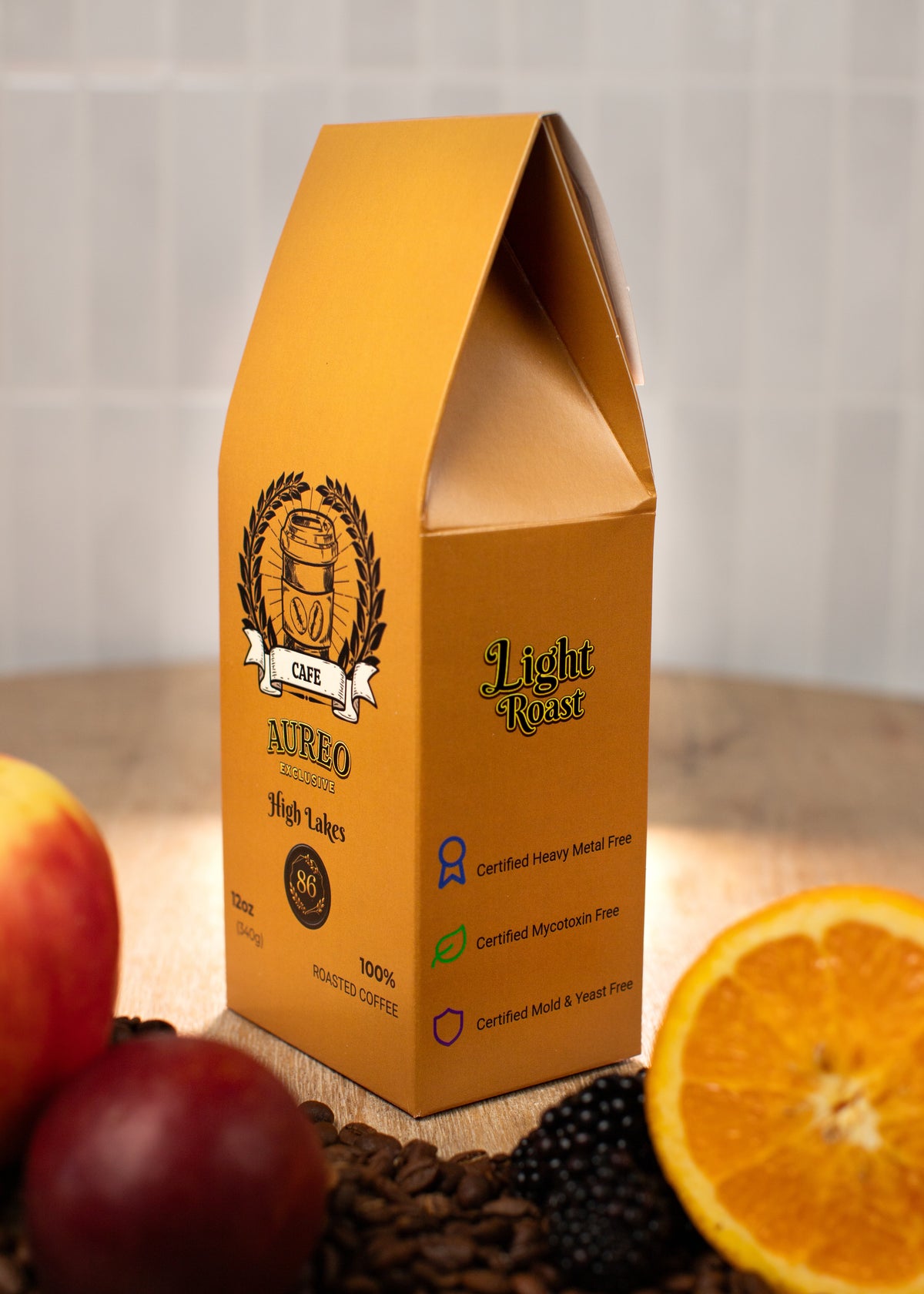
A real example: Peru SO
Here's how those details read together on one AUREO coffee, Peru SO:
| On the bag | Peru SO | What it tells you |
|---|---|---|
| Roast | Light-Medium | Bright fruit with some added sweetness |
| Origin and region | Peru, Amazonas | A single origin from one region |
| Altitude | 1,500–1,550 MASL (about 4,900–5,100 ft) | A high-grown coffee |
| Processing | Washed, with a 12–18 hour fermentation | Expect a clean, clear cup |
| Varieties | Caturra, Catimor, Bourbon, Typica | Background detail |
| Tasting notes | Apple, plum, pineapple, chocolate aroma, juicy smooth body, fruity finish | Fruit-forward with a smooth texture |
Put together: a clean, fruit-forward coffee that will taste best black, brewed as pour-over or drip. Every AUREO product page lists the same details, so you can compare coffees the same way. Browse all AUREO coffees, or let the AUREO Coffee Finder suggest one for you.